Historic properties throughout Riverside, Avondale, and Springfield often lack the attic clearance or wall cavity space required for conventional central ductwork. Adding traditional metal trunks to 1920s bungalows can…
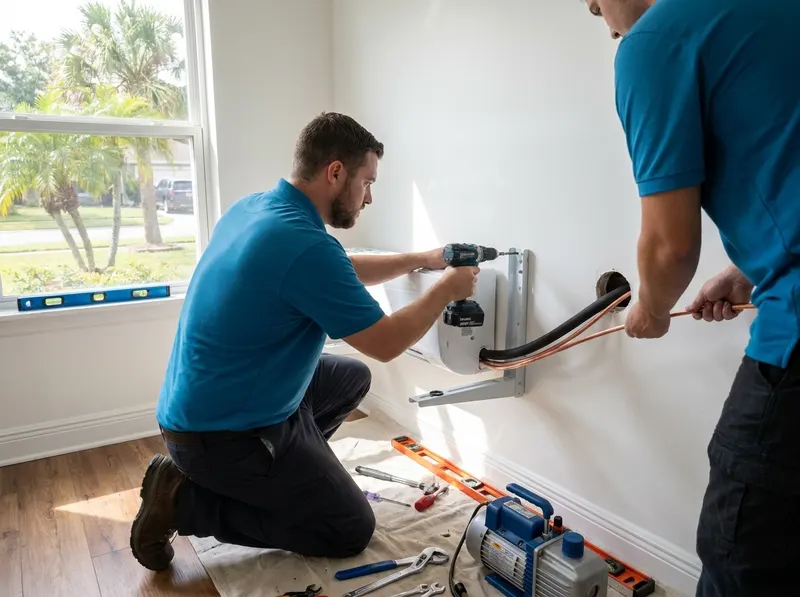
Historic properties throughout Riverside, Avondale, and Springfield often lack the attic clearance or wall cavity space required for conventional central ductwork. Adding traditional metal trunks to 1920s bungalows can compromise architectural details and drop ceiling heights. A ductless mini-split solves this structural challenge by requiring only a three-inch conduit pass-through in an exterior wall. The compact indoor unit delivers direct cooling precisely where needed, safeguarding historic plasterwork while restoring manageable indoor temperatures during intense summer heat waves.
Zoned mini-split systems are also well-suited for localized hot spots in Mandarin, Southside, and Intracoastal West residences. Enclosed lanais, room additions over garages, and detached workshops frequently overwhelm existing central air systems. Running continuous ductwork into these spaces can disrupt airflow balance across the entire house. A dedicated ductless heat pump operates independently, matching output to room demand so you avoid overcooling the rest of your home just to keep a sunroom comfortable.
The primary operational trade-off of a mini-split system is visible indoor hardware in exchange for substantial energy gains. While indoor wall units remain visible in the room, eliminating ductwork stops the 20 to 30 percent thermal loss typical of unconditioned Florida attics near the St. Johns River. Inverter-driven compressors modulate their speeds continuously rather than cycling abruptly on and off, keeping interior humidity stable while lowering monthly electric draw.
Every job gets a firm, written price after a free on-site visit.
Tell us about your ductless mini-split installation job in Jacksonville and we'll send a clear, written quote — usually the same day.
 Premier Air Services HVAC